Workroomly Blog

Articles on customers, teamwork and business operations.

Blogs

All articles

19 articles

Blogs

Why Disconnected Tools Create Disconnected Teams

Businesses often rely on multiple tools to manage communication, projects, customer relationships, and daily operations. However, when these tools operate independently, teams become disconnected, information gets scattered, and collaboration suffers. This article explains how connected workflows improve communication, increase productivity, and create a better experience for both employees and customers.

Read article
Blogs

Where Most Client Relationships Break Down

Strong client relationships rarely end because of one major mistake. More often, they deteriorate through small but repeated issues such as poor communication, inconsistent follow-ups, unclear expectations, and a lack of accountability. This article explores the most common reasons businesses lose valuable clients and explains how scattered information, delayed responses, and transactional interactions weaken trust over time. It also highlights practical strategies for strengthening client relationships through consistent communication, proactive support, centralized client management, and clear ownership. By focusing on relationship-building rather than simply completing transactions, businesses can improve client satisfaction, increase retention, and create long-term partnerships that support sustainable growth.

Read article
Blogs

Revenue Is Built on Process, Not Pressure

Many businesses respond to slowing revenue by putting more pressure on their sales teams, believing that increased activity will produce better results. However, lasting revenue growth is driven by structured processes rather than constant urgency. This article explores how clearly defined workflows, consistent follow-ups, accountability, and organized customer management create predictable sales performance and better customer experiences. It also explains why businesses that invest in repeatable systems are better equipped to forecast revenue, scale operations, and build long-term customer relationships. Ultimately, sustainable revenue comes from creating processes that enable teams to perform consistently not from simply asking them to work harder.

Read article
Blogs

The Real Cost of Poor Client Management

The Real Cost of Poor Client Management explores how businesses often lose money not because they struggle to attract customers, but because they fail to properly manage the customers and leads they already have. The blog highlights how missed follow-ups, poor communication, and disorganized client information can lead to lost revenue, reduced customer trust, inefficient teams, and lower customer retention. It also explains that as businesses grow, relying on emails, WhatsApp messages, and memory becomes unsustainable, creating confusion and operational chaos. Effective client management systems help businesses centralize customer information, improve communication, assign responsibilities, and track every opportunity and interaction. Ultimately, the article emphasizes that sustainable growth depends not only on acquiring new customers but also on having reliable processes for managing existing relationships. Every missed follow-up, delayed response, and forgotten conversation carries a cost that can significantly impact long-term business success. Short Summary (2–3 sentences) Poor client management silently damages businesses by causing lost revenue, poor customer experiences, team inefficiencies, and lower retention rates. The blog emphasizes the importance of having structured systems and processes in place to manage customer relationships effectively and support sustainable growth.

Read article
Blogs

Why Your Team Feels Busy But Revenue Stays Flat

Many businesses mistake busyness for productivity, only to find that sales and revenue remain stagnant. This article explores the common reasons teams stay busy without delivering meaningful business results and shares practical strategies for improving focus, streamlining workflows, and driving sustainable revenue growth.

Read article
Blogs

The Real Cost of Poor Client Management

Poor client management costs businesses more than missed sales—it leads to lost revenue, declining customer trust, operational inefficiencies, and increased churn. Businesses that centralize customer information and build consistent management processes are better positioned for sustainable growth and stronger client relationships.

Read article
Blogs

Can You Trust Your CRM With Your Business?

Customer Relationship Management (CRM) systems have evolved from simple sales tools into the operational backbone of modern businesses. They now handle everything from lead tracking and customer communication to pipeline management and team coordination. As a result, businesses are becoming increasingly dependent on them to keep daily operations running smoothly.

Read article
Blogs

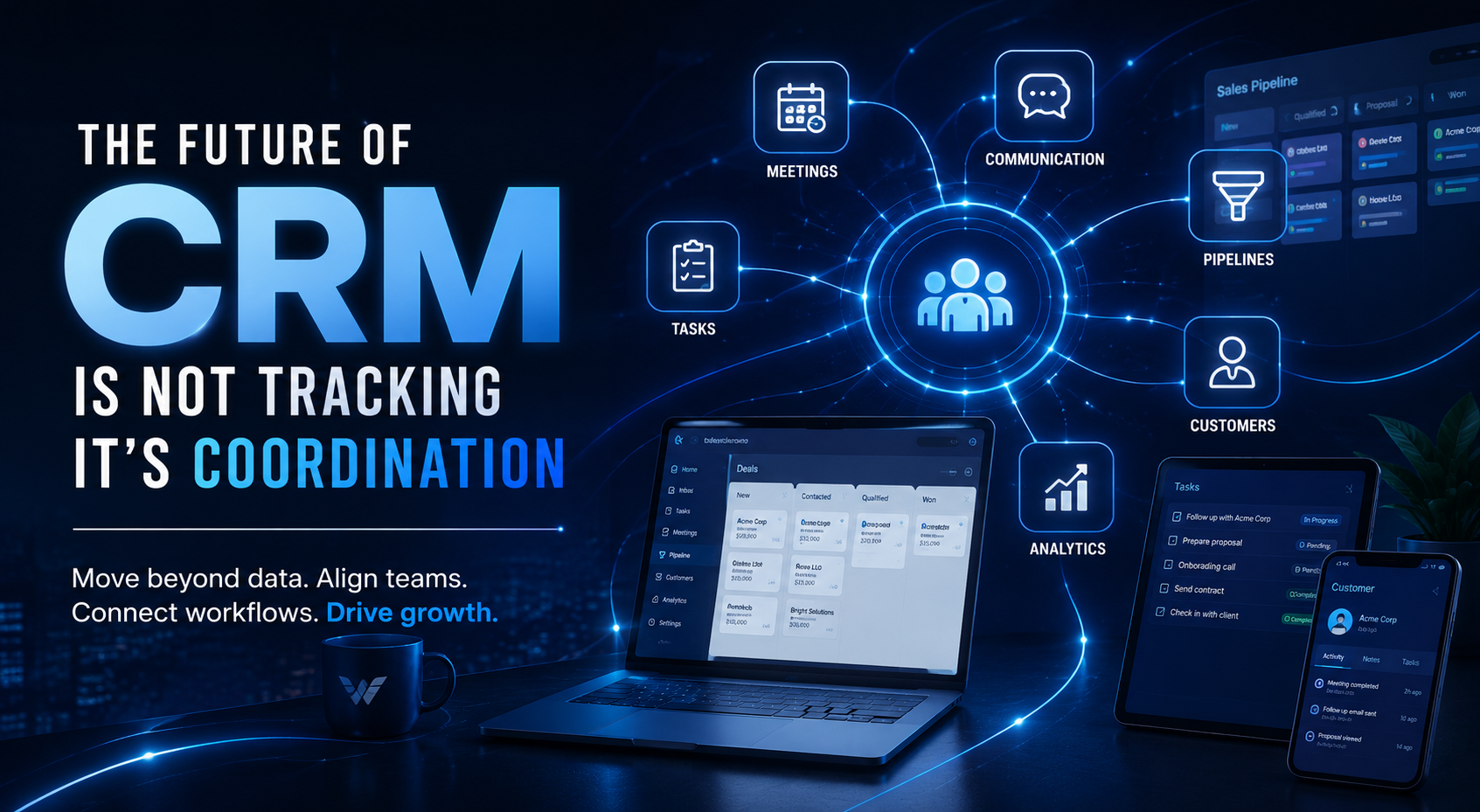
The Future of CRM Is Not Tracking It’s Coordination

Traditional CRM systems were built to track customer activity, but modern businesses now face a different challenge: disconnected workflows. As teams juggle sales, operations, meetings, support, and follow-ups across multiple tools, the real problem is no longer visibility, but coordination. This article explores why the future of CRM is shifting from passive tracking systems to connected operational platforms that align teams, streamline workflows, and create smoother customer experiences.

Read article
Blogs

Why Reliability Matters More Than Features in CRM

While advanced features may attract businesses initially, long-term trust is built through stability, consistency, and dependable performance. Unreliable systems create operational friction, reduce team confidence, and negatively impact revenue by disrupting workflows and customer management.

Read article
Blogs

The Hidden Gaps in Your Sales Pipeline That Cost You Revenue

The article explains how businesses often lose revenue not because of poor demand or lack of leads, but due to unnoticed weaknesses within their sales pipelines. It highlights common problems such as unclear pipeline stages, inconsistent follow-ups, lost client context, undefined ownership, and confusion between activity and actual progress. These issues create friction that slows conversions and weakens growth over time.

Read article
Blogs

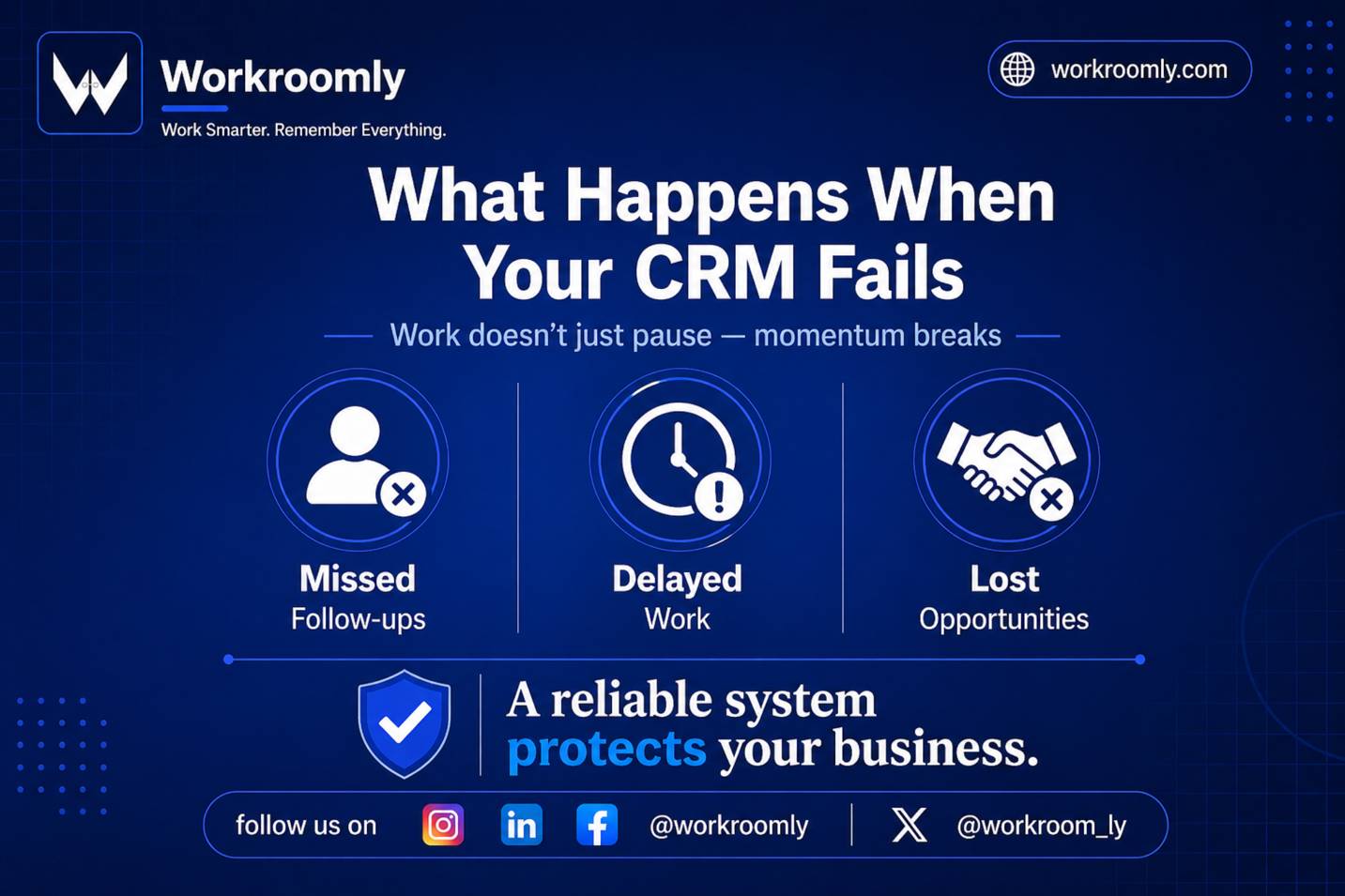
What Happens When Your CRM Fails: And How to Prevent It

A CRM is central to business operations, so when it fails, it disrupts workflows, delays responses, and leads to lost opportunities and weakened customer trust. Preventing this requires choosing reliable, well-tested systems that prioritize stability, structure, and continuity over just features.

Read article
Blogs

What a CRM Really Does (And Why Your Business Needs One)

A CRM system brings structure to how businesses manage client interactions, turning scattered information into a clear, organized process. It helps teams track leads, maintain consistent follow-ups, and make better decisions, ultimately driving more reliable growth.

Read article

Learn to use Workroomly

Find practical lessons and guided learning paths in Workroomly Academy.