Revenue loss is rarely obvious.
It doesn’t always come from a lack of leads or poor market demand. In many cases, it comes from small, unnoticed gaps in the sales process — gaps that quietly disrupt momentum and reduce conversions over time.
On the surface, everything may look fine.
Leads are coming in.
Conversations are happening.
Deals are moving.
But beneath that activity, there are often structural issues that prevent those efforts from turning into actual revenue.
Where Pipelines Begin to Break
A sales pipeline is meant to provide clarity.
It should show where every lead stands, what needs to happen next, and how close each opportunity is to conversion.
However, in many businesses, the pipeline becomes more of a passive board than an active system.
Leads enter, but they are not consistently moved forward.
Stages exist, but they are not clearly defined.
Actions are taken, but they are not tracked.
Over time, this creates friction.
And friction slows growth.
The Gap Between Activity and Progress
One of the most common issues in sales pipelines is the confusion between activity and progress.
Teams may be busy — sending messages, holding meetings, following up occasionally.
But without structure, this activity does not always translate into movement.
A lead can remain in the same stage for days or even weeks.
Follow-ups may happen inconsistently.
Next steps may not be clearly defined.
As a result, opportunities stall.
And stalled opportunities rarely convert.
Lost Context, Lost Opportunities
Another hidden gap is the loss of context.
When client information is scattered across different tools or conversations, it becomes difficult to maintain a clear understanding of each deal.
What was discussed last?
What was promised?
What does the client expect next?
Without clear answers, communication becomes reactive instead of intentional.
And when communication lacks clarity, trust begins to weaken.
Inconsistent Follow-Up
Many deals are not lost — they are simply not followed up properly.
A delayed response.
A missed reminder.
An untracked conversation.
These small moments add up.
Without a structured system to guide follow-ups, even interested leads can fade away.
Consistency is what keeps deals alive.
Without it, pipelines quietly lose value.
Undefined Ownership
In some cases, the issue is not the pipeline itself, but the lack of ownership within it.
When it is unclear who is responsible for a lead, actions are delayed.
Tasks are assumed to be handled.
Follow-ups are overlooked.
Accountability becomes weak.
A pipeline without clear ownership becomes difficult to manage effectively.
Visibility Without Insight
Having a pipeline is one thing.
Understanding it is another.
Many systems provide visibility — a list of deals, stages, and contacts.
But without meaningful insight, teams struggle to make decisions.
Which deals need attention?
Which ones are at risk?
Where should effort be focused?
Without clarity, teams react instead of act.
From Passive Tracking to Active Coordination
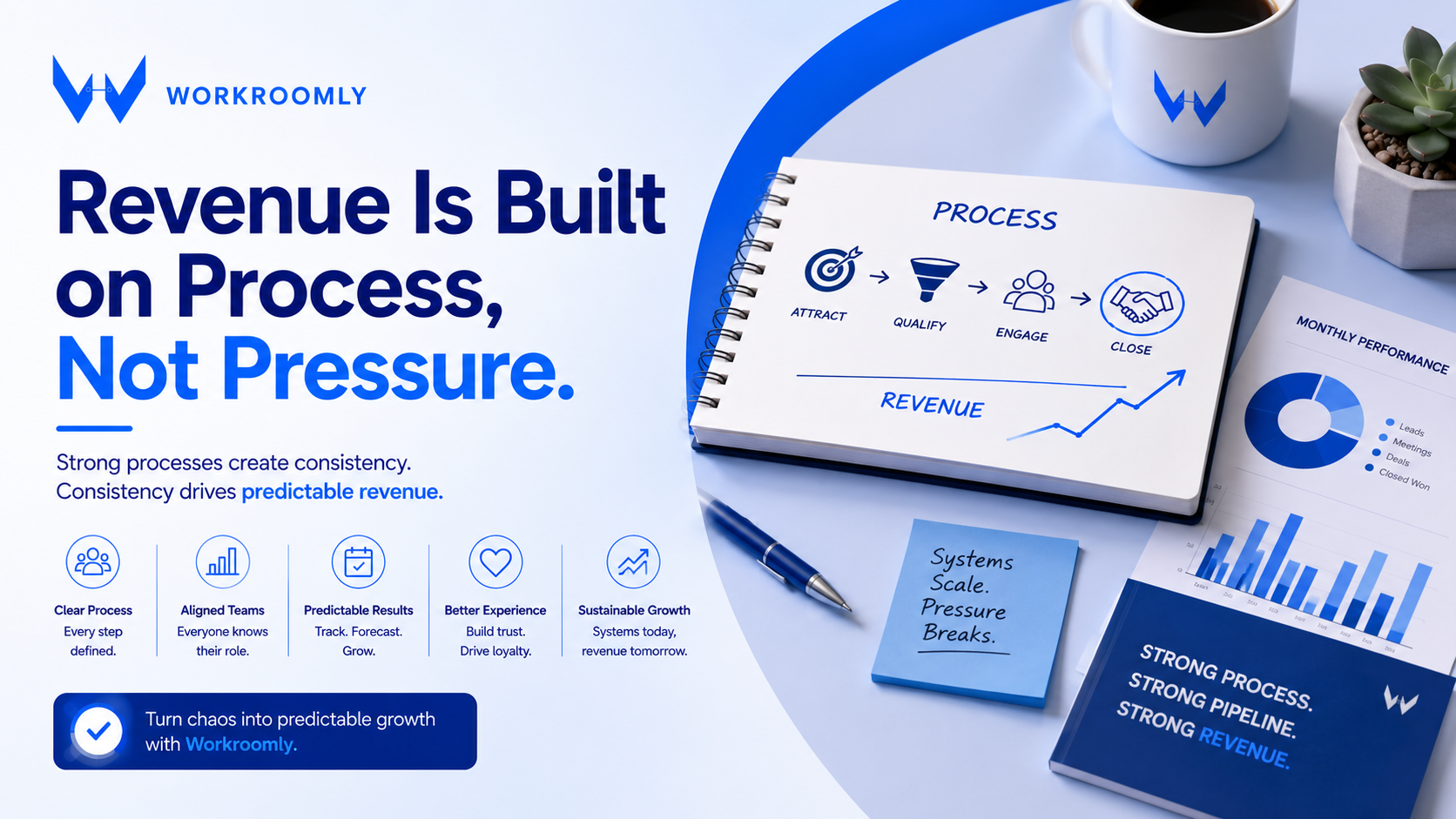
To close these gaps, businesses need to move beyond simply tracking deals.
They need systems that actively support the sales process.
This means:
Every stage has a clear purpose.
Every lead has a defined next step.
Every interaction is connected to action.
When a pipeline is structured this way, it becomes more than a visual board.
It becomes a working system.
Aligning Pipeline With Workflow
The most effective pipelines are not isolated.
They are connected to the broader workflow.
Conversations lead to tasks.
Tasks drive follow-ups.
Follow-ups move deals forward.
When everything is aligned, progress becomes consistent.
This is where modern systems are evolving — toward environments where pipelines, communication, and execution are connected.
Platforms like Workroomly reflect this shift, where pipelines are not just used to monitor deals, but to coordinate the entire journey from lead to outcome.
Conclusion
The biggest threats to revenue are often not visible.
They exist in small gaps — missed follow-ups, unclear stages, lost context, and weak structure.
Individually, they may seem minor.
But collectively, they create friction that slows growth and reduces conversions.
Closing these gaps requires more than effort.
It requires structure.
Because when your sales pipeline is clear, connected, and actively managed, revenue becomes more predictable — and opportunities are no longer left to chance.