For years, CRM systems have been built around one core idea:
Track everything.
Track leads.
Track emails.
Track deals.
Track customer activity.
And for a long time, that was enough.
Businesses needed visibility into customer relationships, and CRM platforms became the central place for storing information and monitoring sales activity.
But modern work has changed.
Today, businesses are no longer struggling because they lack data.
They are struggling because their work is disconnected.
Information exists everywhere, yet teams still experience confusion, delays, missed follow-ups, and fragmented workflows.
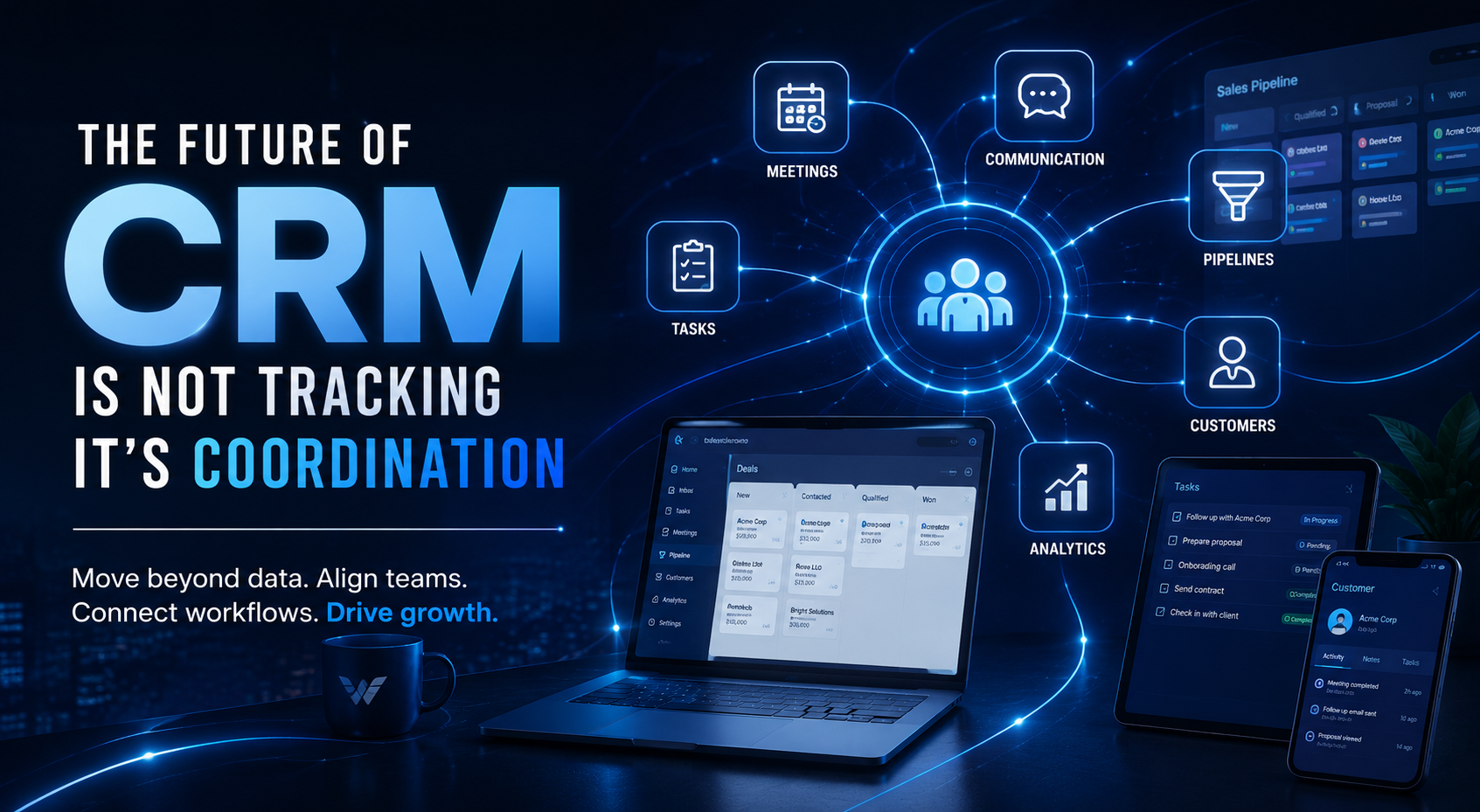
That is why the future of CRM is no longer just about tracking activity.
It is about coordinating work.
Tracking Alone No Longer Solves the Problem
Traditional CRM systems were designed primarily as record-keeping tools.
They helped businesses answer questions like:
- Who is the client?
- What stage is the deal in?
- When was the last interaction?
- What is the estimated value?
These insights remain important.
But modern teams need more than visibility.
They need alignment.
Because knowing what is happening is different from ensuring the right actions happen next.
A deal may be visible inside the pipeline, but if follow-ups are delayed, meetings are disconnected, or responsibilities are unclear, progress slows down anyway.
The issue is no longer information.
The issue is coordination.
Modern Workflows Are More Complex
Sales today is no longer isolated to one department.
Customer relationships now involve:
- sales teams,
- support teams,
- operations,
- onboarding,
- meetings,
- task management,
- and continuous communication.
This means the customer journey is no longer a straight line.
It is a connected operational process.
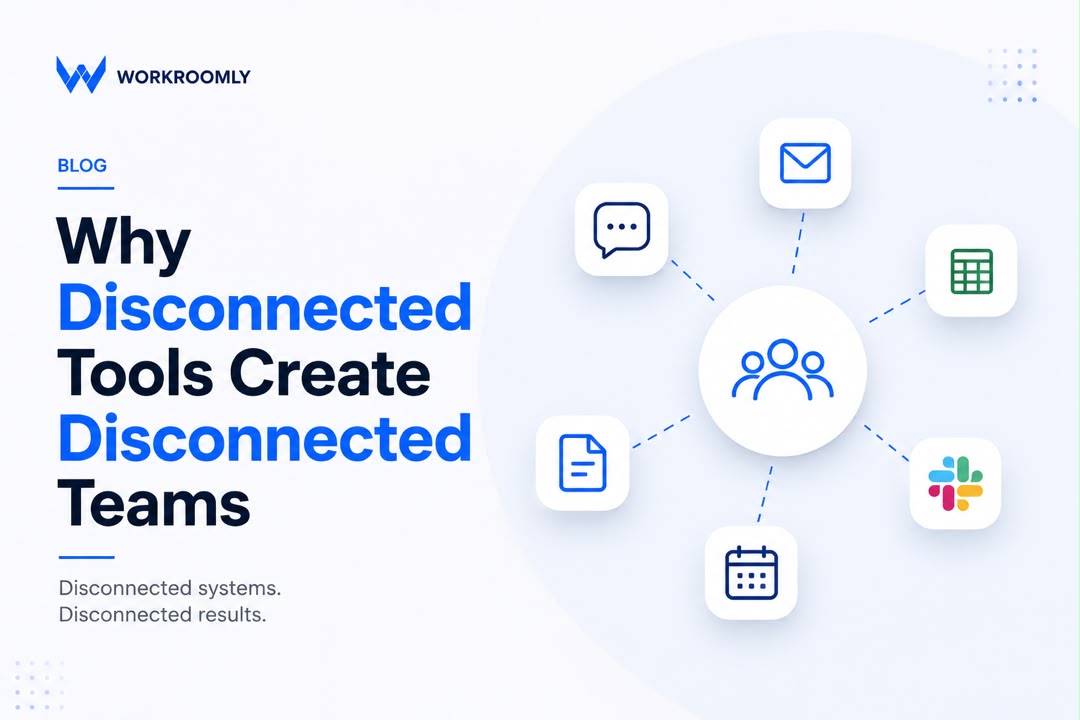
And disconnected systems create friction inside that process.
A team may hold meetings in one platform.
Track deals in another.
Manage tasks elsewhere.
Store notes separately.
Over time, context becomes fragmented.
People spend more time reconnecting information than moving work forward.
Coordination Creates Momentum
The next evolution of CRM is not simply storing customer data more efficiently.
It is creating systems where work flows together naturally.
Coordination means:
- meetings connect to tasks,
- tasks connect to pipelines,
- pipelines connect to customer conversations,
- and teams remain aligned around the same workflow.
This reduces operational gaps.
Instead of constantly asking:
- “Who handled this last?”
- “What happens next?”
- “Where was this discussed?”
- “Did anyone follow up?”
Teams operate with shared clarity.
And clarity creates momentum.
The Shift From Passive Systems to Active Workflows
Many older CRM systems behave like passive databases.
Information is stored, but teams still have to manually coordinate everything around it.
Modern businesses are beginning to expect more.
They want CRM systems that actively support workflows, not just record them.
This includes:
- connected communication,
- structured follow-ups,
- workflow continuity,
- collaborative visibility,
- and operational accountability.
The CRM is evolving from a storage system into a coordination layer for business operations.
Why Coordination Improves Customer Experience
Customers may never see the internal systems a company uses.
But they feel the effects immediately.
When coordination is weak:
- responses become inconsistent,
- follow-ups are forgotten,
- onboarding becomes confusing,
- and communication feels fragmented.
But when teams operate through connected workflows, the customer experience becomes smoother.
The relationship feels more intentional.
That consistency builds trust.
And trust strengthens retention.
Businesses Are Prioritizing Operational Clarity
As companies grow, operational complexity increases.
More clients.
More conversations.
More internal collaboration.
More moving parts.
Without coordinated systems, growth eventually creates chaos.
This is why many modern businesses are shifting toward platforms that unify workflows instead of separating them across disconnected tools.
The focus is changing from:
“How much can this CRM track?”
To:
“How well does this CRM coordinate the work around the customer?”
That distinction is shaping the next generation of business software.
The Future Is Connected Work
The future of CRM is not about overwhelming businesses with more dashboards, notifications, or isolated features.
It is about reducing friction between teams, workflows, and customer interactions.
This is the direction many modern platforms are evolving toward, including solutions like Workroomly, where meetings, workflows, pipelines, and customer management exist within one connected operational system.
Because businesses do not just need visibility anymore.
They need coordination.
Conclusion
Tracking created the first generation of CRM value.
But coordination is shaping the future.
Modern businesses need systems that do more than store information.
They need systems that connect conversations, workflows, follow-ups, and teams into one clear operational flow.
Because growth is no longer limited by access to information.
It is limited by how well businesses coordinate the work behind it.