Why Your Team Feels Busy But Revenue Stays Flat
Your team is working every day.
They are attending meetings, replying to messages, following up with clients, creating reports, handling requests, and completing tasks.
Everyone seems busy.
But at the end of the month, revenue has not improved.
Sales are not growing.
Leads are not converting.
The business is putting in effort, but the results are not matching the activity.
This is a common problem for many growing businesses.
Being busy does not always mean the team is being productive.
Sometimes, teams are working hard on tasks that do not directly move the business forward.
Activity Is Not the Same as Progress
A team can be active all day without making meaningful progress.
For example, team members may spend hours attending meetings that do not lead to decisions. They may reply to messages without resolving customer issues. They may create reports that nobody uses.
These activities can make people feel productive, but they may not improve sales, customer retention, or business growth.
The key question is not, “Is the team busy?”
The key question is, “Is the team working on the activities that drive results?”
Too Many Manual Tasks Slow the Team Down
When processes are not organized, teams spend too much time on manual work.
They may be copying information from one platform to another, searching through old messages, updating spreadsheets, or trying to remember what was discussed with a client.
These small tasks may not seem serious, but they take up valuable time.
Instead of focusing on closing deals, improving customer experience, or following up with leads, the team becomes busy managing disorganization.
Over time, this affects revenue.
Leads Are Not Being Followed Up Properly
One of the biggest reasons revenue stays flat is poor follow-up.
A business may generate many leads, but if there is no structured process for responding, tracking, and following up, those leads may never become customers.
Some leads may be contacted once and forgotten.
Others may receive late responses.
Some may be passed between team members without clear ownership.
When follow-ups are inconsistent, potential customers lose interest.
The business may think it has a marketing problem when it actually has a process problem.
Teams Lack Clear Priorities
When teams do not have clear priorities, they often focus on whatever feels urgent at the moment.
A message comes in, and everyone rushes to respond.
A new task appears, and existing work is abandoned.
A meeting is scheduled, and the team spends hours discussing issues without a clear action plan.
This creates a reactive work culture.
Instead of focusing on high-impact tasks, the team is constantly putting out fires.
Clear priorities help teams understand what matters most.
For example:
- Which leads need immediate follow-up?
- Which clients are at risk of leaving?
- Which deals are close to closing?
- Which tasks directly support revenue growth?
Without this clarity, effort becomes scattered.
There Is No Clear View of the Sales Pipeline
A business cannot improve what it cannot see.
If the team does not have a clear view of the sales pipeline, it becomes difficult to understand where opportunities are being lost.
The business may not know:
- How many active leads are in the pipeline
- Which leads are ready to buy
- Which deals have been delayed
- Why prospects are not converting
- Which team member is responsible for each opportunity
Without this information, sales decisions are based on guesswork.
A clear sales pipeline helps the team focus on the right opportunities and take action before leads go cold.
Meetings and Tasks Are Not Connected to Business Goals
Meetings are important, but too many meetings can reduce productivity.
If meetings do not lead to decisions, responsibilities, or action items, they become another reason the team feels busy without making progress.
The same applies to tasks.
Every task should connect to a clear business goal.
For example, a task should help the business:
- Generate leads
- Convert prospects
- Retain customers
- Improve customer experience
- Reduce delays
- Increase revenue
When tasks are not connected to goals, the team may work hard without seeing meaningful results.
How to Help Your Team Focus on Revenue-Driving Work
Businesses can reduce unnecessary activity by creating clearer systems and priorities.
This can include:
- Setting clear weekly goals
- Tracking sales leads and follow-ups
- Assigning ownership for tasks and clients
- Reducing unnecessary meetings
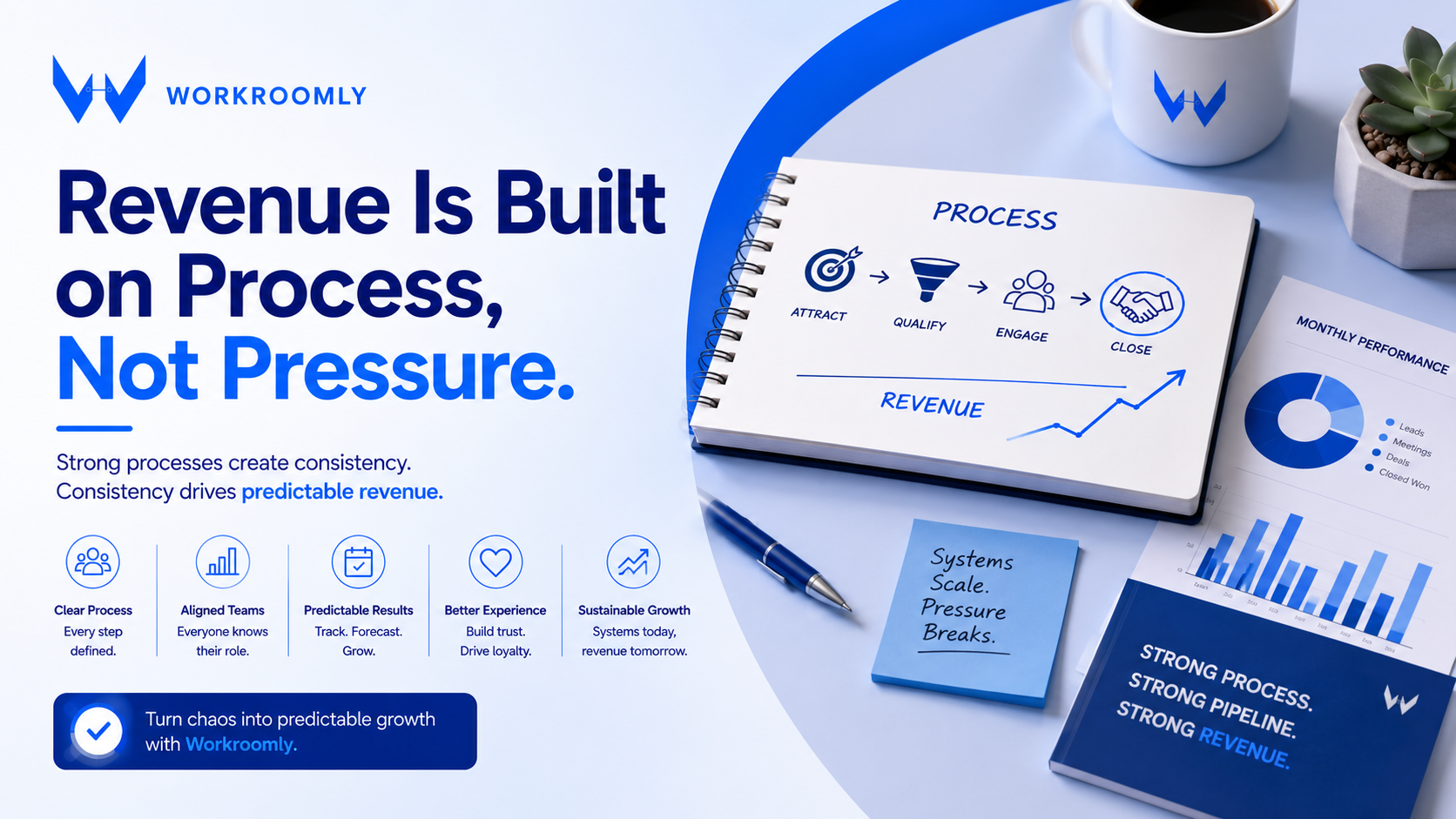
- Creating a structured sales pipeline
- Automating repetitive tasks
- Reviewing performance based on outcomes, not only activity
When teams know what matters, they can spend less time reacting and more time creating results.
Final Thoughts
A busy team is not always a productive team.
When revenue stays flat, it is important to look beyond effort and focus on process.
Are leads being followed up?
Are tasks connected to business goals?
Are team members spending time on the right activities?
Are sales opportunities being tracked properly?
The goal is not to make your team work harder.
The goal is to help them work with more clarity, structure, and focus.
Because when the right work is done consistently, revenue has a better chance to grow.