Many businesses believe that increasing sales is simply a matter of pushing their teams harder.
More calls.
More meetings.
More targets.
More pressure.
When revenue begins to slow, the first instinct is often to demand more activity from sales representatives or customer-facing teams.
While effort is important, pressure alone rarely creates sustainable growth.
In fact, excessive pressure often leads to burnout, inconsistent customer experiences, and short-term decision-making that hurts the business in the long run.
The businesses that consistently grow revenue are not necessarily the ones with the busiest teams.
They are the ones with the strongest processes.
A repeatable, well-defined process allows businesses to generate predictable results without relying on constant urgency.
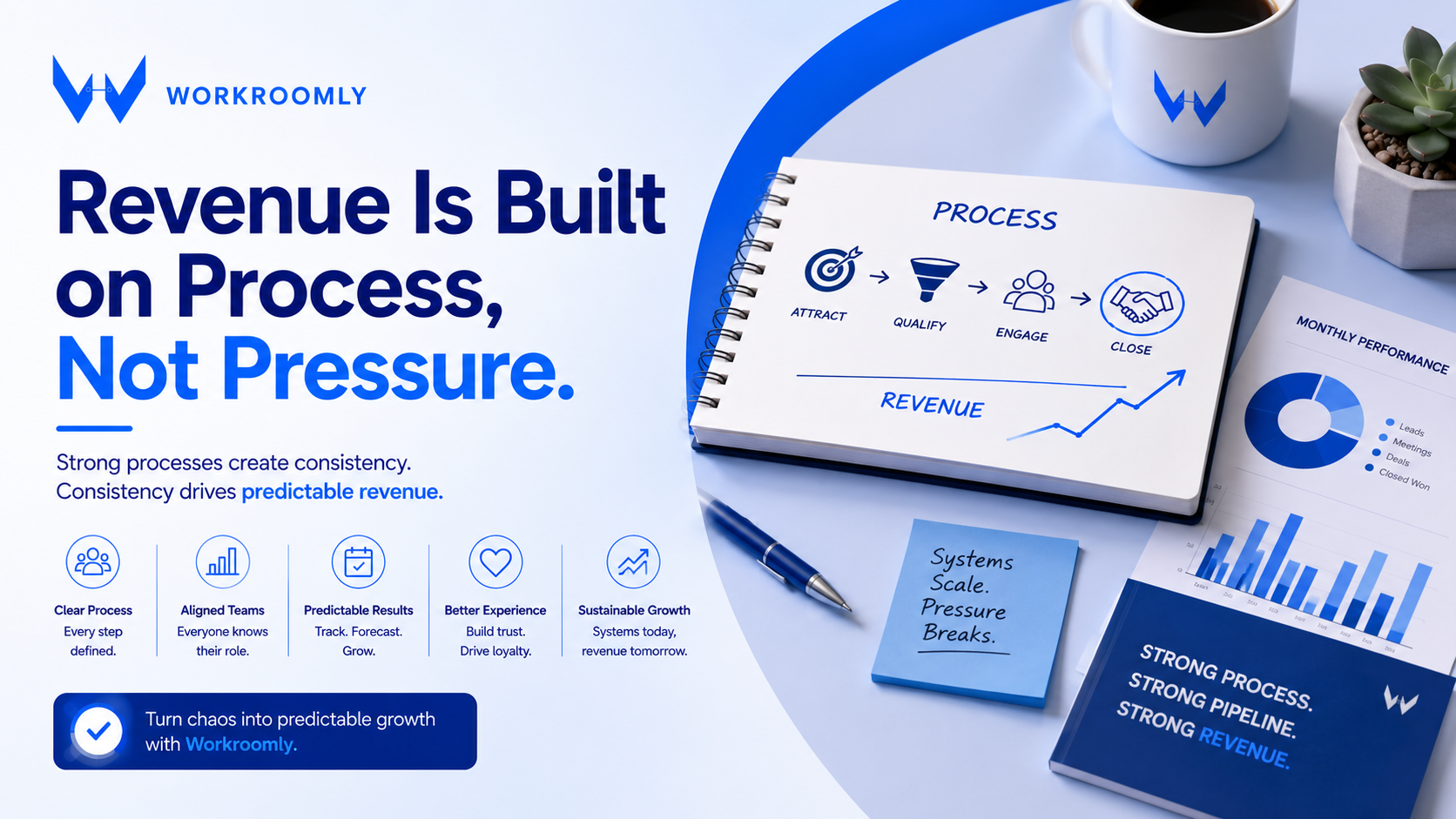
Revenue is not built on pressure.
It is built on process.
Pressure Creates Activity, Not Consistency
Pressure can motivate people for a short period.
A sales team may make more calls before the end of the month. Customer success teams may rush to respond faster. Managers may push employees to close deals before deadlines.
Sometimes this produces immediate results.
But these results are rarely sustainable.
When people operate under constant pressure, they often focus on completing tasks instead of building relationships.
Important details get overlooked.
Follow-ups become rushed.
Customer conversations become transactional rather than meaningful.
Eventually, performance becomes inconsistent because it depends on motivation instead of a reliable system.
Strong Processes Remove Guesswork
A structured process gives every team member a clear understanding of what needs to happen next.
Instead of relying on memory or individual habits, the business operates with consistency.
Every lead follows the same journey.
Every opportunity is tracked.
Every customer interaction has a defined purpose.
This creates confidence across the organization.
Sales representatives know when to follow up.
Managers know where deals are within the pipeline.
Leadership gains visibility into business performance.
Instead of reacting to problems, teams proactively manage them.
Predictable Revenue Comes From Predictable Workflows
One of the biggest advantages of a well-designed process is predictability.
Businesses can forecast revenue with greater accuracy because every opportunity moves through clearly defined stages.
Leads are qualified using the same criteria.
Meetings are documented.
Tasks are assigned.
Follow-ups happen on schedule.
Potential risks become visible before opportunities are lost.
When businesses understand exactly where customers are in the buying journey, they can make better decisions about hiring, budgeting, marketing, and future growth.
Predictability reduces uncertainty.
Uncertainty is one of the biggest obstacles to sustainable revenue.
Better Customer Experiences Drive Better Results
Customers rarely notice your internal processes.
They notice the experience those processes create.
When businesses operate with clear workflows, customers receive timely communication, consistent updates, and professional service.
Questions are answered faster.
Meetings are organized.
Promises are fulfilled.
The buying experience feels effortless.
This builds trust.
Trust increases confidence.
Confidence improves conversion rates and encourages long-term customer relationships.
Revenue grows naturally when customers enjoy working with your business.
Teams Perform Better With Clear Systems
High-performing teams rarely succeed because individuals work harder than everyone else.
They succeed because everyone understands their responsibilities.
Ownership is clear.
Tasks are assigned.
Progress is visible.
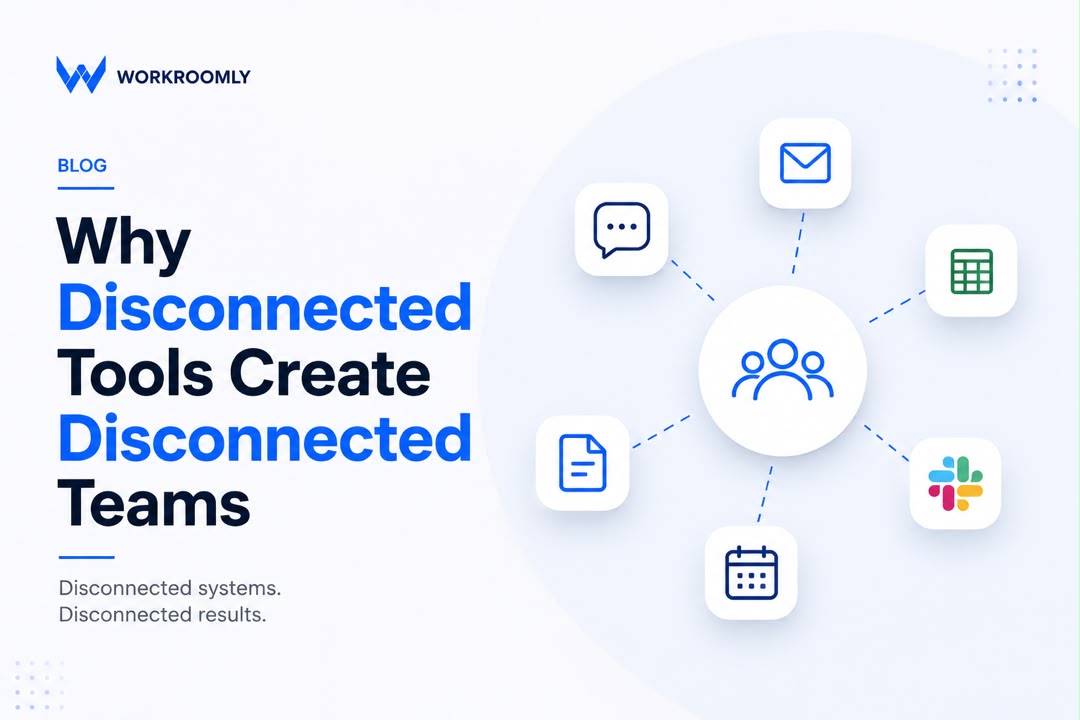
Collaboration becomes easier because information is centralized rather than scattered across emails, spreadsheets, and chat conversations.
Instead of wasting time searching for updates, employees spend more time creating value.
A structured process allows teams to focus on solving customer problems instead of managing internal confusion.
Growth Without Process Creates Chaos
Many businesses experience rapid growth before developing operational structure.
Initially, this may seem exciting.
More customers.
More sales.
More opportunities.
However, without defined processes, growth quickly exposes weaknesses.
Customer requests become harder to manage.
Follow-ups are missed.
Team communication becomes inconsistent.
Leaders spend their days solving problems that could have been prevented.
The business begins working harder while accomplishing less.
Scaling should simplify operations—not complicate them.
That only happens when processes grow alongside the business.
Technology Supports Process—It Doesn't Replace It
CRM platforms and business management tools are valuable because they support structured workflows.
However, software alone cannot fix a broken process.
If a business lacks clear responsibilities, documented workflows, or accountability, introducing new technology will only organize existing confusion.
Successful businesses first define how work should happen.
Technology then helps automate, track, and improve those processes.
The system strengthens discipline.
It does not replace it.
Building a Revenue-Driven Process
Businesses that want consistent revenue should focus on creating repeatable systems rather than increasing pressure.
This includes:
- Defining every stage of the sales pipeline.
- Standardizing lead qualification.
- Creating consistent follow-up schedules.
- Assigning ownership for every opportunity.
- Tracking customer interactions in one place.
- Monitoring performance using measurable data.
- Continuously reviewing and improving workflows.
These practices create alignment across the organization and reduce unnecessary friction.
As the process improves, revenue becomes more predictable.
Final Thoughts
Revenue growth is rarely the result of working harder alone.
It comes from building systems that help teams perform consistently, customers feel supported, and opportunities move efficiently through the sales journey.
Pressure may increase activity.
Process creates results.
Businesses that invest in clear workflows, accountability, and structured customer management are better positioned to grow without relying on constant urgency or last-minute effort.
Because lasting revenue is not built by pushing people harder.
It is built by giving them a process that works consistently, every single day.