Modern workplaces are more technologically equipped than ever before. Teams have access to messaging platforms, project management tools, cloud storage systems, meeting software, and countless productivity apps designed to make work easier.
Yet despite all these tools, many professionals feel more overwhelmed than productive.
The problem is not a lack of technology. The problem is digital clutter.
Digital clutter happens when work becomes scattered across too many tools, platforms, and information channels. Instead of improving efficiency, the growing stack of applications slowly introduces friction into daily workflows. Over time, this friction compounds and quietly erodes productivity.
The cost is rarely obvious at first. But it is very real.
When Tools Multiply Faster Than Structure
In most organizations, new software is adopted with good intentions. A team introduces a messaging app to improve communication. Another tool is added for task management. A CRM is implemented to manage clients. A document platform is introduced for collaboration.
Each tool solves a specific problem.
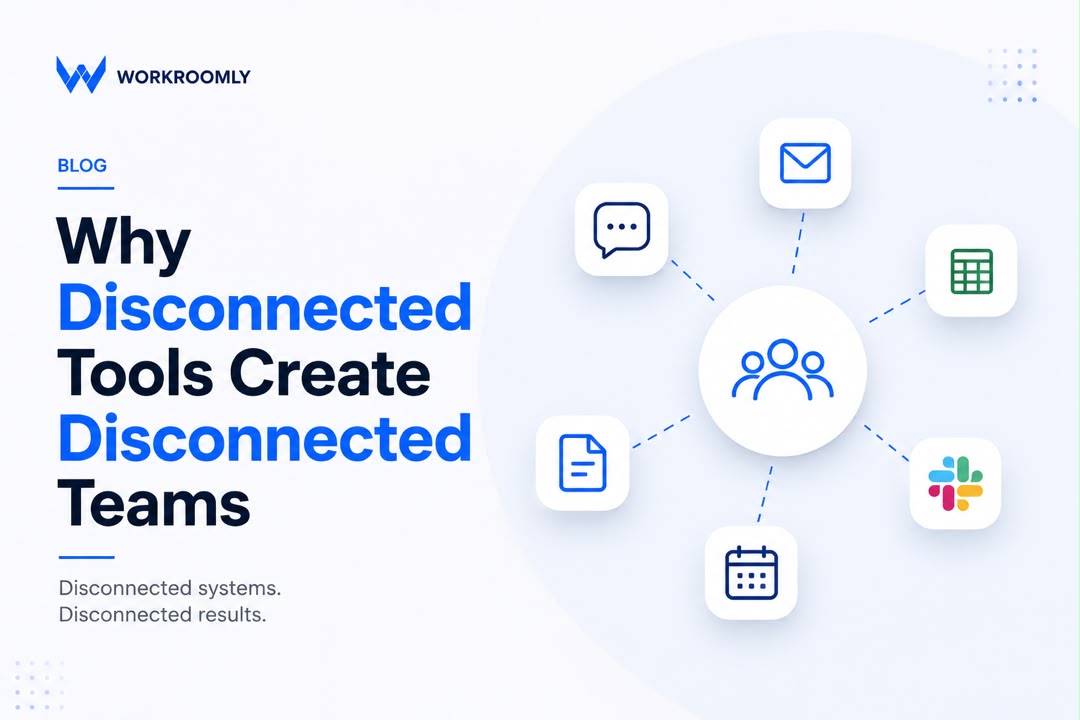
However, when these tools operate independently from one another, they create a fragmented environment where information lives in separate places.
A conversation about a project might happen in a messaging app. The task related to that discussion sits in a project board. Supporting documents are stored somewhere else. Meanwhile, updates about the client exist inside a CRM.
Individually, these tools work well. Together, they create a scattered system that forces employees to constantly search, switch, and reconnect information manually.
This fragmentation is the beginning of digital clutter.
The Productivity Drain of Constant Context Switching
One of the biggest hidden costs of digital clutter is context switching.
Every time a professional jumps from one application to another, their brain must reorient itself to a new interface, a new dataset, and a new workflow. While this may only take a few seconds each time, the cumulative effect across a workday is significant.
Research on workplace productivity consistently shows that frequent context switching reduces focus and increases cognitive fatigue. Employees spend more time locating information, retracing conversations, and verifying updates than actually executing meaningful work.
Instead of focusing on outcomes, teams become managers of tools.
And when that happens, productivity begins to slow.
When Visibility Disappears
Another subtle consequence of digital clutter is the loss of operational visibility.
In a fragmented workspace, leaders struggle to see the full picture of what is happening inside their teams. Tasks may be progressing in one platform, client updates may exist in another, and decisions made in meetings may never properly connect to execution.
This disconnect often leads to duplicated work, missed follow-ups, and confusion about responsibility.
When information is scattered, coordination becomes reactive instead of strategic.
Employees begin asking questions like:
- Where was that document shared?
- Who updated the client last?
- Is this task already assigned to someone else?
These small uncertainties slow momentum and introduce unnecessary delays into everyday workflows.
The Psychological Weight of Digital Disorganization
Beyond operational inefficiencies, digital clutter also affects how people feel about their work.
Constant notifications, endless tabs, and scattered information streams create a sense of mental overload. Even when the workload itself is manageable, the environment can make work feel chaotic.
Over time, this contributes to burnout and frustration.
Professionals begin their day by navigating tools rather than advancing meaningful work. Instead of feeling in control of their workflow, they feel pulled in multiple directions by disconnected systems.
The result is a workplace that feels busier than it actually is.
Moving Toward Structured Workspaces
The solution to digital clutter is not eliminating technology. Modern work depends on digital tools.
The real solution is structure.
Organizations that improve productivity are not necessarily those with the most tools, but those with the most organized digital environments. They prioritize systems where communication, tasks, documentation, and client information connect naturally rather than existing in isolation.
When work is structured, teams spend less time searching for information and more time acting on it. Conversations lead directly to tasks. Tasks connect to deliverables. Deliverables connect to outcomes.
This alignment reduces friction and restores clarity to everyday work.
Why Structure Matters More Than Tools
Technology should support the flow of work, not interrupt it.
When systems are designed around structure rather than scattered functionality, employees gain a clearer understanding of priorities, progress, and responsibilities. Teams collaborate more smoothly because information moves through the organization in a connected way.
Instead of juggling platforms, professionals interact with a unified workflow that reflects how work actually happens.
This shift from scattered tools to structured environments represents the next stage of workplace productivity.
Conclusion
Digital tools have transformed the way modern teams operate. But without intentional organization, these tools can easily become a source of clutter rather than clarity.
The hidden cost of digital clutter is not just inefficiency. It is lost focus, reduced visibility, and a growing sense of workplace chaos.
The future of productive workspaces lies in systems that prioritize connection, structure, and clarity across the entire workflow.
Platforms designed with this philosophy in mind are beginning to reshape how teams manage communication, projects, clients, and documentation in one aligned environment.
Solutions like Workroomly, for example, reflect a broader shift toward unified digital ecosystems where work flows naturally instead of being scattered across disconnected tools.
As organizations continue to rethink how work should happen in a digital age, the goal becomes clear: fewer fragmented systems and more structured environments where productivity can truly thrive.